
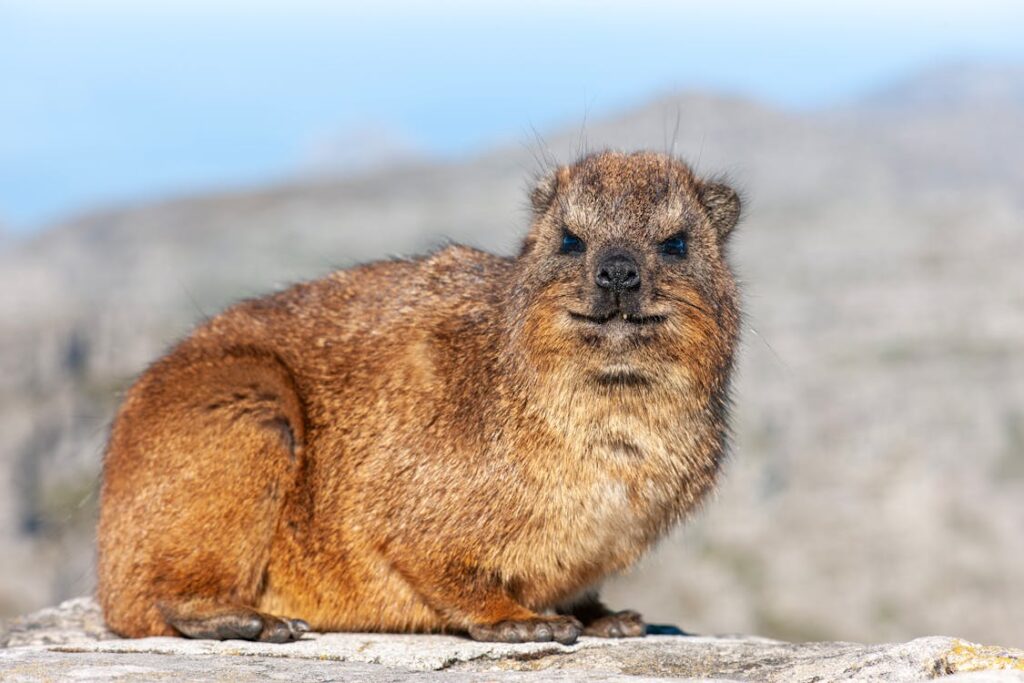
The Squeaky Cousin of Giants
It’s hard to take the Rock Hyrax seriously at first glance. About the size of a rugby ball with short legs, tiny ears, and a habit of sunbathing on boulders, it looks like it belongs on someone’s porch, not in the African wild.
But don’t be fooled—this little mammal has serious bush credentials. And shockingly, its closest living relatives include elephants and manatees. (Blame it on ancient evolutionary detours.)
🪨 Rock Solid Lifestyle
Rock Hyraxes are built for the cliffs and kopjes of southern Africa. They:
- Live in colonies of up to 80 individuals
- Spend their mornings sunbathing on rocks to warm up (they’re not great at regulating body temp)
- Have rubbery, suction-like feet for gripping vertical rock faces
- Use sentinels to keep watch while others feed or nap
- Eat grasses, herbs, and leaves, occasionally raiding crops if near farms
They’re social, vocal, and surprisingly agile for their round little builds. They’re also nocturnal and diurnal, with different activity peaks based on temperature and predator pressure.
📢 Weird Noises, Weirder Secrets
Hyraxes make a wide range of calls, from barking alarms to twittery territorial songs. In fact, their vocal range is so diverse that researchers have used them to study early mammalian communication patterns.
They also:
- Use communal latrine rocks (yes, poop piles)
- Have special scent glands on their backs to mark social rank
- Rely on very sharp eyesight to detect eagles, leopards, and snakes
🛡️ Not Hunted, But Not Harmless
While not a pest in most areas, Rock Hyraxes:
- Can cause minor erosion around dens in rocky outcrops
- Attract large raptors and caracals, especially where colonies are thriving
- Sometimes nest under rooftops or sheds if the area’s overbuilt
But for the most part, they’re harmless and protected, and a fun bonus to any safari experience—especially when they squeak in chorus from a cliff face.
